Introduction: The Rise of Invisible AI Cyberattacks
In recent years, artificial intelligence (AI) has revolutionized countless industries. However, the same technologies that empower innovation are now enabling a new wave of cyber threats. Invisible AI cyberattacks—stealthy, automated, and nearly undetectable—are rapidly becoming the future of digital fraud. As threat actors harness machine learning to bypass security systems, traditional defense mechanisms are proving insufficient.
These AI-powered attacks are not only faster and more scalable but also capable of mimicking legitimate user behavior, making them incredibly hard to detect. Businesses of all sizes, especially those with inadequate cybersecurity strategies, are increasingly vulnerable. According to recent reports, attackers are leveraging AI to manipulate data, craft hyper-realistic phishing campaigns, and exploit vulnerabilities with surgical precision.
Understanding the mechanics, risks, and defense strategies against invisible AI cyberattacks is essential for any organization aiming to secure its digital assets. In this article, we will explore how AI is transforming the cyber threat landscape, examine real-world examples, and present effective countermeasures, including solutions offered by Hodeitek’s cybersecurity services.
How Invisible AI Cyberattacks Work
Exploiting Machine Learning Algorithms
Attackers now use machine learning to analyze and predict user behavior. By training AI models on large datasets of user activity, they can create malware that mimics legitimate traffic patterns. This makes detection by conventional security systems extremely difficult. The result is a new generation of invisible AI cyberattacks that can remain dormant or undetected until they cause serious harm.
These AI-powered attacks can adapt to changing network environments, adjust their attack vectors in real-time, and optimize their success rates. Essentially, the AI learns from the target’s behavior and improves itself continuously, making each new attack more effective than the last.
Security experts are now recommending proactive defense systems that utilize AI as well, creating a cybersecurity arms race between attackers and defenders.
Automated Phishing and Deepfake Attacks
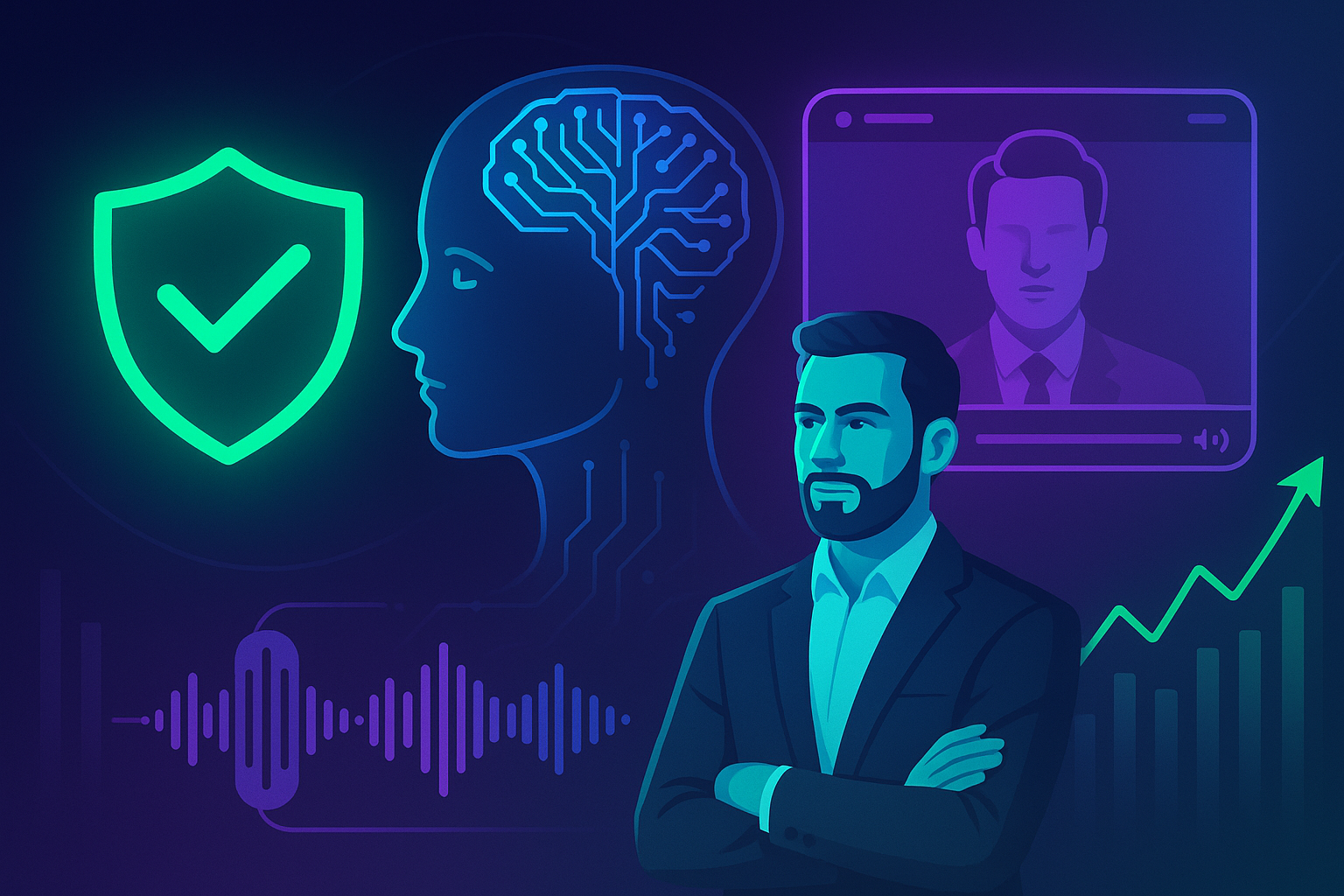
One of the most alarming uses of AI in cybercrime is the creation of hyper-realistic phishing messages and deepfake videos. These tools can convincingly impersonate company executives, government officials, or trusted vendors. AI can analyze public communication styles, tone, and language to craft messages that appear authentic to the recipient.
Deepfake audio and video content can be used to manipulate decision-makers into transferring funds or revealing sensitive information. This level of deception, powered by AI, is nearly impossible for human recipients to detect without specialized tools.
Protecting against such threats requires advanced email filtering, AI-driven behavioral analysis, and strong user education protocols, all of which are offered under Hodeitek’s Cyber Threat Intelligence (CTI) service.
Bypassing Traditional Security Measures
Invisible AI cyberattacks are designed to evade legacy security systems such as signature-based antivirus and rule-based firewalls. AI algorithms can automatically identify which security controls are active and adapt their behavior to avoid triggering them. This renders static defenses obsolete.
To combat this, organizations must deploy dynamic and adaptive security solutions like Hodeitek’s EDR, XDR, and MDR services, which leverage AI to detect and respond to anomalies in real-time.
Additionally, the integration of threat intelligence feeds allows for more contextual analysis and proactive defense, reducing the window of opportunity for attackers.
Key Threat Vectors in AI-Powered Cyberattacks
Data Poisoning and Model Inversion
Data poisoning involves feeding incorrect or malicious data into an AI model to alter its behavior. Cybercriminals can use this method to manipulate automated decision-making systems, such as fraud detection engines, leading to massive security breaches.
Model inversion attacks, on the other hand, attempt to reconstruct the training data used in AI models. If the model was trained on sensitive personal data, attackers can reverse-engineer that information, leading to privacy violations and compliance issues.
To mitigate these risks, security teams must implement rigorous data validation and integrity checks, combined with encryption protocols for sensitive training datasets.
AI-Enabled Social Engineering
Social engineering attacks have always relied on manipulating human behavior. With AI, these attacks become far more sophisticated. For example, AI can scrape social media data to identify personal interests, communication patterns, and organizational hierarchies.
This information is then used to craft highly personalized attacks that are more likely to succeed. The rise of AI has led to an explosion in spear-phishing and business email compromise (BEC) cases worldwide.
Combating these attacks requires employee training, multifactor authentication (MFA), and monitoring tools like Hodeitek’s SOC as a Service (SOCaaS) 24×7 solutions.
AI-Powered Malware Evasion
Traditional malware often leaves identifiable signatures. AI-powered malware, however, can change its code in real-time, making detection almost impossible. These polymorphic threats are capable of morphing every time they are executed, rendering signature-based detection tools ineffective.
Such malware can also hide in encrypted traffic or legitimate application processes, evading firewalls and endpoint protection solutions. The only effective defense is behavioral-based detection, which identifies anomalies rather than known threats.
Solutions like Hodeitek’s Next Generation Firewall (NGFW) and advanced endpoint detection systems are crucial in detecting these sophisticated threats.
Real-World Examples of Invisible AI Cyberattacks
The AI Phishing Campaign on Microsoft 365 Users
In a recent case reported by Microsoft, hackers used AI tools to launch a targeted phishing campaign on Microsoft 365 users. The attackers employed natural language generation (NLG) models to craft convincing emails that mimicked internal communication styles.
The AI-generated emails included links to fake login pages, which also adapted in real-time to look identical to the user’s actual corporate login portal. This level of deception led to thousands of compromised accounts before the attack was mitigated.
This incident underscores the necessity of advanced threat detection tools and user awareness training to combat invisible AI cyberattacks.
Deepfake CEO Scam in a UK Firm
In the UK, a financial firm fell victim to a scam where attackers used deepfake audio to impersonate the CEO. The AI-generated voice instructed a manager to transfer €220,000 to a foreign account. Believing the voice to be authentic, the manager complied.
This type of fraud, made possible by AI voice synthesis, demonstrates how invisible AI cyberattacks can bypass even vigilant human oversight. Businesses must implement verification protocols and AI-driven fraud detection systems to prevent such incidents.
Combining Hodeitek’s VMaaS and CTI services can help detect and prevent deepfake-based scams.
AI Malware in Industrial Control Systems
Industrial control systems (ICS) are increasingly targeted by AI-powered malware. In one instance, a European energy provider experienced a breach where the malware adapted to the ICS environment, avoiding detection for months.
The malware used reinforcement learning to optimize its actions and only triggered specific functions when predefined conditions were met. This allowed the attackers to extract data and manipulate industrial processes subtly and stealthily.
Solutions like Hodeitek’s Industrial SOC as a Service provide specialized 24×7 monitoring tailored for ICS environments.
How Businesses Can Defend Against Invisible AI Cyberattacks
Adopt AI-Driven Cybersecurity Solutions
Fighting AI with AI is the most effective strategy. Organizations must adopt AI-driven cybersecurity tools capable of real-time analysis and response. These systems can identify patterns, detect anomalies, and automate response actions without human intervention.
Hodeitek offers a range of cybersecurity services that incorporate machine learning and AI technologies, enabling businesses to stay ahead of evolving threats.
Investing in these tools is not optional—it’s a necessity in today’s threat landscape where invisible AI cyberattacks are the new norm.
Implement Continuous Monitoring and Threat Intelligence
Continuous monitoring is essential for detecting invisible threats. Hodeitek’s SOCaaS provides 24×7 security operations support, ensuring that any anomalies are identified and addressed immediately.
Additionally, integrating Cyber Threat Intelligence (CTI) enhances an organization’s situational awareness, allowing it to anticipate and respond to emerging threats effectively.
These proactive strategies reduce the time to detection and response, minimizing damage from sophisticated AI-based attacks.
Educate Employees and Strengthen Policies
Human error remains a top vulnerability. Regular training on recognizing phishing, verifying communications, and following security best practices is crucial. AI can deceive, but educated employees can act as the first line of defense.
Strong access controls, policy enforcement, and incident response playbooks should be standard practice across all departments.
Hodeitek provides consultation and implementation support for enterprise-wide security policies tailored to counter AI-based threats.
Conclusion: The Era of Invisible AI Cyberattacks Has Begun
Invisible AI cyberattacks represent a paradigm shift in the cybersecurity landscape. Their stealth, adaptability, and precision make them some of the most dangerous threats facing modern businesses. As AI continues to evolve, so too will the sophistication of these attacks.
Organizations must act now—by adopting AI-driven defenses, enhancing their monitoring capabilities, and educating their workforce—to mitigate the risks posed by these undetectable threats. The cost of inaction could be catastrophic, both financially and reputationally.
Hodeitek stands ready to support businesses in this critical transition. With a comprehensive suite of AI-enabled cybersecurity services, we help organizations detect, respond to, and neutralize invisible AI cyberattacks before they cause damage.
Secure Your Business Against Invisible AI Cyberattacks Today
Are you prepared to face the next generation of cyber threats? Don’t wait for a breach to act. Contact Hodeitek today for a personalized cybersecurity assessment and discover how our AI-powered solutions can safeguard your digital future.
- 24×7 SOCaaS for real-time threat monitoring
- EDR, XDR, MDR for endpoint security and rapid incident response
- VMaaS for proactive vulnerability detection
Empower your organization with the tools to combat invisible AI cyberattacks. The future of cybersecurity starts now.
Sources: